
Best Toys for Indoor Cats Who Get Bored Fast (What Actually Works)
This post may contain affiliate links. If you choose to purchase through them, I may earn a small commission at no extra cost to you
Intro
If your indoor cat loses interest in toys within minutes — or ignores them completely — you’re not alone. Many indoor cats get bored fast, especially when toys don’t match their natural instincts.
The truth is, it’s not that your cat is “lazy” or picky. Most store-bought toys simply don’t offer enough stimulation. This guide breaks down the types of toys that actually keep indoor cats engaged — and why they work.
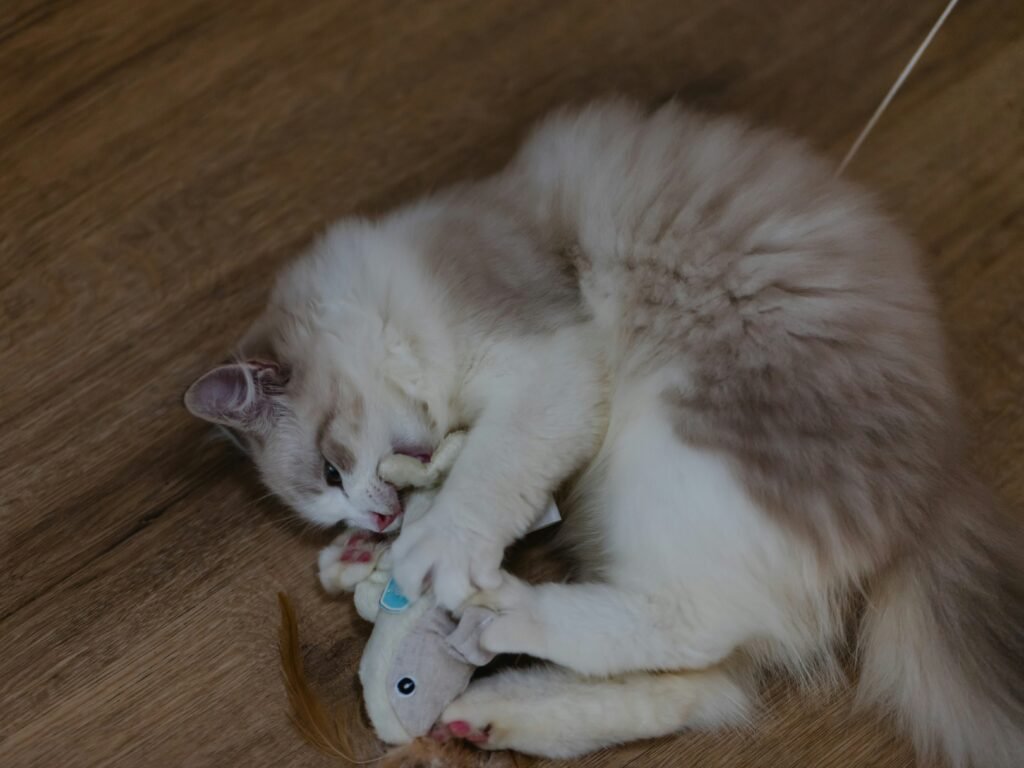
This guide is part of my complete Indoor Cat Enrichment resource, where I organize toys, routines, and ideas to keep indoor cats engaged
Why Many Indoor Cats Get Bored with Toys
Cats are hunters, not exercisers. Toys that don’t mimic hunting behaviors — stalking, chasing, pouncing, problem-solving — lose their appeal quickly.
Common issues:
- toys are left out all the time
- play sessions are too long
- toys don’t move unpredictably
- toys don’t involve interaction
The right toy combined with the right routine makes all the difference.
If you’re not sure whether boredom is the issue, these are the common signs of boredom in indoor cats to watch for.
As an Amazon Associate, I earn from qualifying purchases
1. Interactive Wand Toys (Best Overall)
For cats who get bored fast, this type of interactive wand toy is a reliable option because it allows you to control the movement and keep play unpredictable.
Why they work:
Wand toys activate your cat’s full hunting sequence — stalking, chasing, jumping, and catching.
Look for:
- feathers or fabric at the end
- flexible rods
- unpredictable movement
Tips for success:
- keep wand toys stored when not in use
- end play with a “catch”
- use before meals when possible
These are especially effective for indoor cats with lots of pent-up energy.
2. Puzzle Toys & Treat Dispensers
If you’re looking for a simple starting point, this puzzle feeder works well for indoor cats who are food-motivated and tend to get bored easily. This type of toy isn’t necessary for every cat, but it can be helpful for cats who constantly beg for food or seem restless between meals.
Why they work:
Mental stimulation is just as important as physical activity.
Best for:
- cats who overeat
- cats who beg for food
- cats that ignore traditional toys
Puzzle toys give your cat a job to do — which reduces boredom and anxiety.
3. Motion-Activated or Self-Moving Toys
Why they work:
Unpredictable movement keeps cats interested longer.
Use these wisely:
- rotate them
- don’t leave them on all day
- supervise at first
These toys work best as occasional enrichment, not all-day entertainment.
Used sparingly, a motion-activated cat toy like this can add novelty for indoor cats who lose interest quickly.
4. Kicker Toys for Stalking & Wrestling
Why they work:
Kicker toys allow cats to grab, bite, and bunny-kick — all natural behaviors.
Great for:
- playful or aggressive cats
- redirecting rough play
- solo play sessions
Catnip-filled kickers often work well for bored indoor cats.
5. Track & Ball Toys (With a Twist)
Why they sometimes work:
Track toys can be hit or miss.
How to make them better:
- rotate them instead of leaving them out
- combine with wand play
- place them in new locations
They work best when treated as a novelty.
6. Window Toys & Visual Stimulation
Why they work:
Watching birds, bugs, and people provides passive enrichment.
For indoor cats who enjoy watching the outside world, a window perch like this gives them a comfortable place to observe without taking up floor space.
Good options:
- window perches
- suction-cup window toys
- bird feeders placed outside (safely)
This is especially helpful for apartment cats.
How to Choose the Right Toy for YOUR Cat
Not all cats play the same way.
Pay attention to whether your cat prefers:
- chasing vs stalking
- climbing vs hiding
- food vs movement
Matching the toy to your cat’s play style is more important than the brand.
How Often Should You Buy New Toys?
You don’t need to constantly buy more toys.
Instead:
- rotate toys weekly
- store extras out of sight
- reintroduce them later
Old toys feel new again when they’re not always available.
If Toys Aren’t Working at All
If your cat ignores every toy, boredom may not be the only issue.
Consider:
- play routine consistency
- environmental changes
- stress or health concerns
Start small and adjust gradually.
Sometimes enrichment needs to go beyond toys — these easy indoor cat enrichment ideas are a great place to start.
Where to Go Next
This post is part of my Indoor Cat Enrichment hub, where I share:
- DIY enrichment ideas
- routines that fit real homes
- ways to prevent boredom long-term
👉 Explore the full Indoor Cat Enrichment guide here